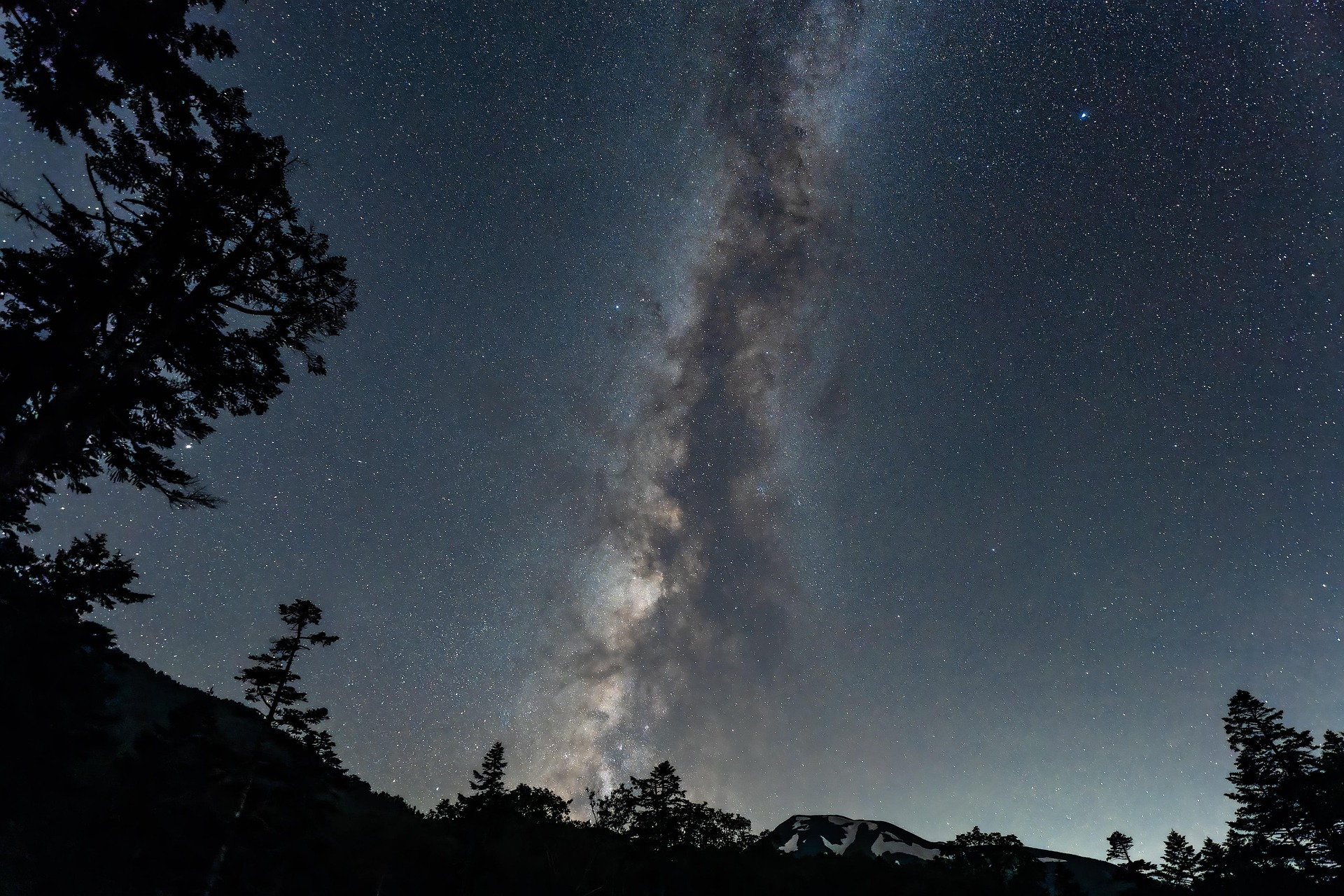
Many of our inns are wonderfully removed from the glow of big towns and cities. Surrounded by rolling landscapes and peaceful villages, we're fortunate to experience some of England's darkest skies, where the stars regularly put on a spectacular show. Teffont House, our first village hotel, sits on the Northern edge of one of England’s most remarkable natural assets: an International ‘Dark Night Sky’ reserve.
Around Teffont House, it’s entirely possible under the right conditions to watch the Milky Way stretch across the sky, pick out thousands of stars invisible from our towns and cities, and even sometimes - spot our galactic neighbor, the Andromeda Galaxy with the naked eye. It’s currently making its slow approach towards us, although thankfully the predicted collision with the Milky Way isn’t due for another five billion years (so you've probably got time to enjoy your glass of wine.)
This year, from mid July through to late August, our Earth passes through streams of ancient comet and asteroid debris, creating a series of meteor showers across the Northern Hemisphere. As tiny fragments race into our atmosphere, they burn up in spectacular fashion, producing the shooting stars that have fascinated skywatchers for centuries.
Alpha Capricornids
The first to arrive are the Alpha Capricornids, reaching their peak on 25th July, and continuing until 15th August. They're a wonderfully understated display (think quality over quantity.) Even under the darkest skies, you might only spot a handful of bright meteors each hour, and unless you're plotting their paths across the stars, you may not even realise you're watching a meteor shower at all. But perhaps that's part of their charm. They reward those willing to slow down, settle in and simply watch.
Southern Delta Aquariids
Soon after comes the Southern Delta Aquariids, often considered July's most prolific shower. Active until 23rd August, they can produce two or three dozen graceful meteors an hour under ideal conditions. Travelling at medium to slow speeds, they appear to glide sideways across the Earth's orbit, creating long streaks of light as debris burns away high in our atmosphere.
The Perseid Meteor Shower
The Perseid Meteor Shower is widely regarded as the highlight of the astronomical calendar and reaches its peak during the early hours of the 13th August. Under beautifully dark skies, it's not unusual to witness more than 50 meteors every hour, many leaving bright glowing trails as they streak overhead. The shower begins to rise after dusk before climbing high into the sky during the early hours of the morning, making it one of the most rewarding celestial events of the year.
A front row seat at Teffont House
The beauty of stargazing is that it requires very little, just your eyes, a little patience and perhaps a warm blanket as your eyes slowly adjust to the darkness. At Teffont House, our Lookout hut offers a peaceful place to settle in after dark, with a mug of Horlicks, a nightcap, or simply enjoying the quiet that settles in the valley, leave your phone inside for half an hour (you’ll survive, trust me) you’ll be amazed by what appears above you.
There’s something wonderfully humbling about sitting beneath a sky that’s remained largely unchanged for millennia. So, this summer, reward yourself with your favourite tipple, wrap up warm, wander up to the Lookout hut and let the night’s sky do the rest. And, if you happen to catch a shooting star or two along the way, all the better.